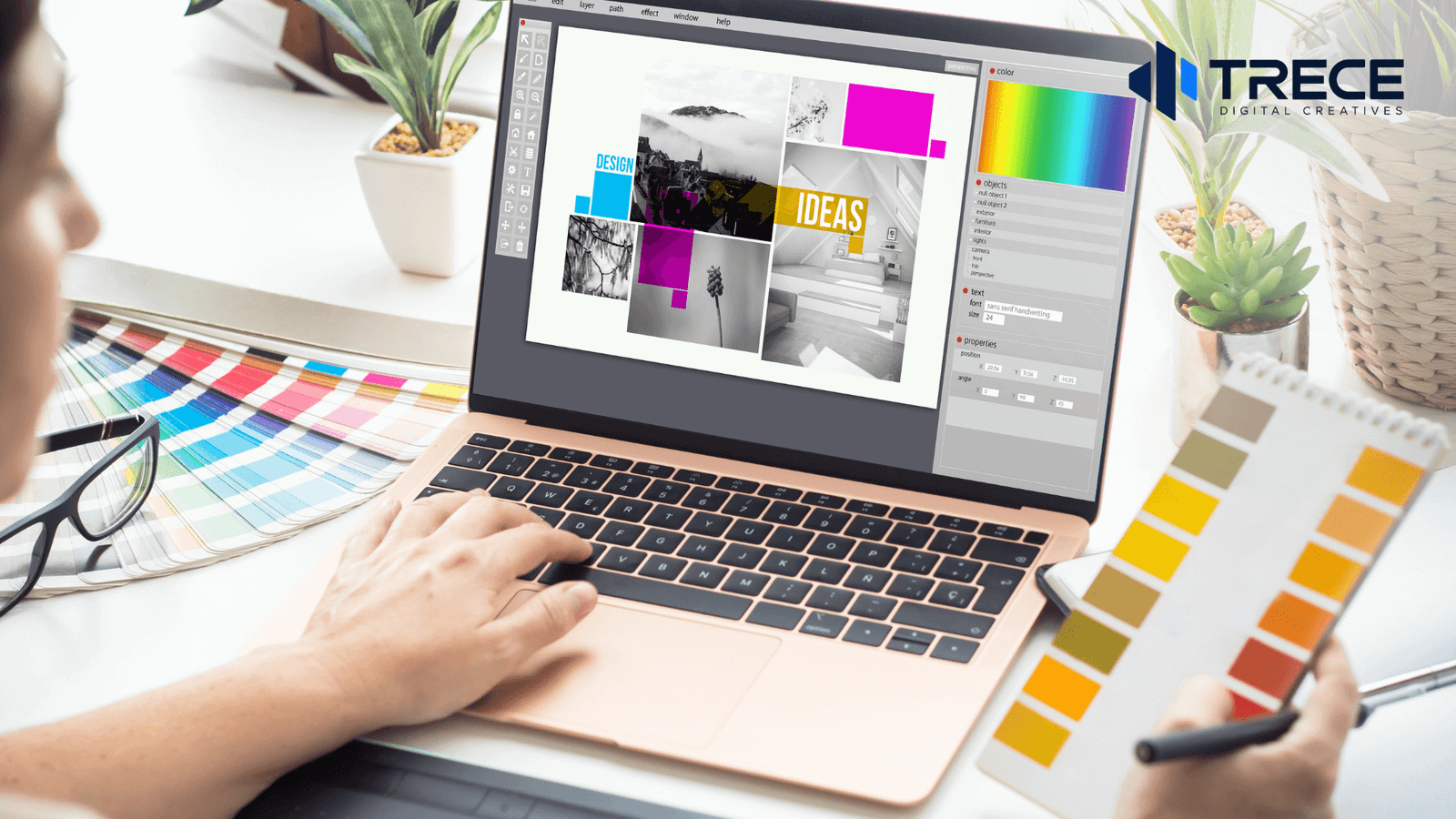


A social media designer creates visual content for platforms such as Facebook, Instagram, LinkedIn, and TikTok. Their main responsibility is to turn marketing messages into clear, attractive, and consistent designs that represent a business or brand.
A typical social media designer job description includes creating graphics, designing promotional content, preparing advertising visuals, following brand guidelines, and adapting designs for different social media formats.
For businesses hiring a designer, understanding these responsibilities helps define the position, evaluate candidates, and determine which design services are actually needed.
What Does a Social Media Designer Do?
A social media designer specializes in creating visual materials for social media marketing. Unlike a general graphic designer who may work across print, packaging, and websites, a social media designer focuses primarily on content intended for social platforms.
Their work can include:
- Social media posts: Branded graphics for announcements, promotions, educational content, and business updates.
- Carousel designs: Multi-slide graphics that explain information or present products and services.
- Stories and Reels graphics: Vertical visual content designed for mobile viewing.
- Social media advertisements: Promotional images and creative variations for paid advertising campaigns.
- Profile and cover graphics: Branded profile visuals, banners, and other account assets.
- Video and animated content: Motion graphics or short-form video editing when included in the position.
The purpose is not simply to make posts visually appealing. A social media designer must also consider the target audience, the message being communicated, and how the content will appear on different devices.
According to the U.S. Bureau of Labor Statistics, graphic designers use visual elements, typography, images, and layouts to communicate ideas. Social media design applies these principles specifically to digital marketing content.
Key Roles and Responsibilities of a Social Media Designer
The exact responsibilities depend on the organization, but most social media design positions involve several core activities.
1. Create Social Media Graphics
A primary responsibility is designing visual content for regular social media publishing.
Designers may receive content briefs, promotional messages, product information, or campaign instructions from a marketing team.
They then transform that information into graphics that communicate the intended message.
For example, a business promoting a seasonal discount may need a graphic featuring the offer, product imagery, brand colors, and a clear call to action.
The designer’s responsibility is to organize these elements into a professional and readable layout.
2. Maintain Brand Consistency
Social media designers help businesses maintain a recognizable visual identity across their content.
This involves following established guidelines for:
- Brand colors and typography
- Logo placement and usage
- Photography and illustration styles
- Graphic layouts and design elements
- Overall visual presentation
Consistency is particularly important when multiple designs are published across different platforms.
A business should be recognizable whether someone encounters its content on Instagram, Facebook, or LinkedIn.
3. Design Promotional and Advertising Content
Social media designers also create graphics for promotional campaigns.
These may include product advertisements, service announcements, limited-time offers, event promotions, and lead-generation campaigns.
Paid advertising designs often require additional attention to messaging, visual hierarchy, and placement requirements.
For example, a Facebook advertisement might require multiple creative variations so a marketing team can compare different visual approaches.
However, creating an advertisement is different from managing the advertising campaign itself. Audience targeting, campaign budgets, and advertising performance management are separate responsibilities unless specifically included in the role.
4. Adapt Designs for Different Platforms
Social media platforms support different content formats, dimensions, and placements.
A designer must understand how to adjust layouts without losing important information.
For example, an Instagram feed graphic may need a different composition when adapted for a vertical Story.
Simply resizing an existing image may crop text, distort the layout, or reduce readability.
A skilled designer adjusts the placement of text, imagery, and branding to suit the intended format.
5. Collaborate With Marketing Teams
Social media designers frequently work with social media managers, copywriters, marketing coordinators, and business owners.
Typical collaboration includes reviewing design briefs, discussing campaign objectives, receiving feedback, and making revisions.
Strong communication is important because the designer must understand what the business wants to communicate before creating the visual content.
6. Review and Finalize Design Files
Before delivering content, designers should check their work for errors.
This includes reviewing spelling, image quality, typography, alignment, and consistency with brand guidelines.
Designers also prepare the appropriate export formats and organize completed assets for delivery.
Depending on the project, these files may include PNG or JPG graphics, MP4 videos, or editable source files.
7. Improve Designs Based on Feedback
Design is often an iterative process.
A business might request a clearer headline, different imagery, revised spacing, or a stronger visual emphasis on its offer.
Social media designers should be able to interpret feedback, make appropriate changes, and explain relevant design decisions.
When performance information is available, designers may also use it to inform future creative variations. However, content performance depends on more than visual design alone.
Required Skills for a Social Media Designer
A strong social media designer combines technical design abilities with communication, organization, and an understanding of digital marketing.
Technical Design Skills
| Skill | Why It Matters |
| Graphic design | Creates professional visual content for social platforms. |
| Typography | Makes headlines, descriptions, and promotional messages readable. |
| Color theory | Helps maintain brand consistency and establish visual hierarchy. |
| Image editing | Prepares, adjusts, and combines photos and graphics. |
| Layout and composition | Organizes information so viewers can understand it quickly. |
| Platform formatting | Ensures designs fit their intended social media placements. |
| Brand guideline application | Maintains consistent visual presentation across campaigns. |
| Basic marketing knowledge | Helps connect creative decisions with the purpose of each post. |
Designers should also consider accessibility. For example, sufficient contrast between text and its background makes content easier to read.
The World Wide Web Consortium’s guidance on text contrast provides useful accessibility principles that designers can apply when evaluating digital content.
Software and Design Tools
Social media designers may use several applications depending on the complexity of their work.
Common options include:
- Adobe Photoshop: For photo editing, image manipulation, and graphic compositions.
- Adobe Illustrator: For vector graphics, illustrations, and scalable design elements.
- Canva: For social media graphics, templates, and branded content.
- Figma: For collaborative layouts, design systems, and digital visual assets.
- Adobe Premiere Pro or After Effects: For video editing and motion graphics when required.
The O*NET graphic designer software skills data identifies commonly requested applications in U.S. graphic design job postings, including Adobe Photoshop, Illustrator, Figma, and Canva.
Businesses do not necessarily need candidates who know every application. The most relevant skills depend on the type of content being produced and the files the business needs.
Soft Skills
Technical ability alone does not guarantee a successful working relationship.
Important professional qualities include creativity, attention to detail, time management, adaptability, and clear communication.
A designer should also be comfortable receiving constructive feedback and working within established deadlines.
For businesses producing content regularly, reliability and organization can be just as important as creative ability.
Social Media Designer vs. Graphic Designer vs. Social Media Manager
These roles overlap, but their primary responsibilities are different.
| Role | Main Responsibility | Typical Work |
| Social Media Designer | Creates visual assets for social platforms | Posts, carousels, Stories, ad graphics, branded templates |
| Graphic Designer | Creates visual communication materials across different media | Logos, brochures, advertisements, print and digital graphics |
| Social Media Manager | Plans, publishes, and manages social media activity | Content calendars, scheduling, community engagement, performance reporting |
A social media designer primarily focuses on visual production.
A social media manager typically handles the broader operation of social media accounts, including publishing, audience interaction, and performance monitoring.
A graphic designer may have the skills to create social content but may not specialize in social platform formats or marketing-focused design.
Some businesses combine these responsibilities into one position. However, employers should clearly explain additional expectations instead of assuming every designer also provides copywriting, social media management, video production, or advertising services.
Sample Social Media Designer Job Description
Businesses can use the following example as a starting point when defining a position.
Job Title: Social Media Designer
Position Overview
We are looking for a creative and detail-oriented Social Media Designer to develop professional visual content for our social media platforms.
The ideal candidate understands graphic design principles, brand consistency, and social media content formats. This role focuses on producing visual assets that communicate marketing messages clearly and support our promotional activities.
Key Responsibilities
- Design graphics for Facebook, Instagram, LinkedIn, and other relevant platforms.
- Create branded social media posts, carousel designs, Stories, and promotional materials.
- Develop advertising graphics based on campaign briefs.
- Follow established brand guidelines across all creative work.
- Adapt designs to different content sizes and platform requirements.
- Collaborate with marketing team members to understand content objectives.
- Review and revise designs based on feedback.
- Organize and deliver completed creative files according to project requirements.
- Maintain consistent design quality while meeting deadlines.
Required Skills and Qualifications
- Strong understanding of typography, color, composition, and visual hierarchy.
- Proficiency in relevant graphic design software.
- Experience creating social media graphics or other digital marketing materials.
- Ability to follow brand guidelines and interpret creative briefs.
- Strong communication and organizational skills.
- Attention to detail and the ability to manage multiple assignments.
- A portfolio demonstrating relevant design capabilities.
Preferred Qualifications
- Experience designing paid social media advertisements.
- Familiarity with different social media content formats.
- Basic motion graphics or video editing skills.
- Experience collaborating with marketing teams.
- Understanding of how visual content supports marketing campaigns.
This is a general job description template, not a current job opening. Employers should customize the responsibilities, qualifications, work arrangement, compensation, and expected deliverables according to their actual requirements.
How to Evaluate a Social Media Designer Before Hiring
A job description explains what a business needs, but reviewing candidates requires more than checking their software knowledge.
The following considerations can help employers make a more informed decision.
Review Relevant Portfolio Samples
A portfolio should demonstrate the type of work the business needs.
For example, if a company regularly publishes promotional carousels, candidates should ideally show examples of multi-slide layouts.
Look beyond visual attractiveness. Evaluate whether the designs communicate information clearly, use consistent typography, and present a recognizable visual identity.
A candidate who creates attractive illustrations may not necessarily have experience designing marketing-focused social media graphics.
Assess Their Understanding of the Business
A designer should be able to explain how a creative approach supports a particular message or audience.
Consider asking:
- How would you approach a promotional post with a large amount of information?
- How do you maintain consistency when designing multiple posts?
- What changes would you make when adapting a graphic for another platform?
- How would you handle feedback that conflicts with good design principles?
These questions help reveal whether candidates understand the reasoning behind their design choices.
Check Communication and Revision Practices
Ask how candidates receive project briefs, communicate progress, and manage revisions.
Clear expectations reduce confusion, particularly when collaborating remotely.
For an additional assessment, employers can consider a small, appropriately compensated design exercise using a defined brief. The task should reflect the actual work required rather than an unrelated creative challenge.
Evaluate the Deliverables, Not Just the Design
Before hiring, confirm what the designer will provide.
A finished image is not necessarily the same as an editable design file.
For example, a business may want reusable templates so future promotions can be updated without rebuilding every graphic.
Clarifying file formats, editable files, ownership terms, and revision expectations helps prevent misunderstandings.
Should a Business Hire a Social Media Designer or Outsource Design Work?
Not every business needs a dedicated full-time designer.
The appropriate arrangement depends on workload, available resources, and the level of collaboration required.
Hiring an In-House Designer
An in-house designer may be appropriate when a business has a consistent volume of creative work and needs frequent coordination with internal teams.
Advantages include direct communication, ongoing familiarity with the business, and dedicated availability during scheduled work hours.
However, a full-time position also involves salary, equipment, software, management, and other employment-related costs.
Hiring a Freelance Designer
A freelancer may be suitable for businesses that need occasional social media graphics, a specific campaign, or a short-term project.
This arrangement can provide flexibility without creating a permanent position.
However, availability, revision arrangements, and continuity may vary depending on the freelancer.
Working With a Design Service Provider
A creative service provider is another option for businesses that need professional social media graphics but do not necessarily need an employee.
Services may be organized around individual projects or ongoing creative requirements, depending on the provider.
The important distinction is scope. Some providers focus on creating visual assets, while others offer broader social media management.
Businesses should confirm which responsibilities are included before choosing a service.
What Should You Prepare Before Working With a Social Media Designer?
Whether hiring an employee, freelancer, or design service provider, a clear brief helps establish expectations.
Before starting, prepare the following information:
- Business and audience: Explain what your business offers and who the content should reach.
- Platforms: Identify where the graphics will be published.
- Content requirements: Specify whether you need static posts, carousels, Stories, advertising graphics, or videos.
- Branding materials: Provide available logos, colors, fonts, brand guidelines, and imagery.
- Content and messaging: Clarify who supplies headlines, captions, promotional details, and calls to action.
- Volume and deadlines: Establish how many assets are needed and when they should be delivered.
- Final deliverables: Confirm file formats, editable source files, design variations, and revision arrangements.
For example, instead of requesting “social media graphics for next month,” a business could specify:
We need eight branded Instagram graphics and two promotional carousels. We will provide the text, logo, brand colors, and product photographs. The designs should be consistent, readable on mobile devices, and delivered in agreed publishing formats.
This hypothetical brief gives a designer a clearer understanding of the required work and makes it easier to establish the project scope.
Common Mistakes When Hiring a Social Media Designer
Businesses can avoid several common problems by defining the role before beginning the hiring process.
Expecting one person to handle every marketing activity. Graphic design, content strategy, copywriting, video production, advertising management, and community management are different functions. Combining them may be appropriate for some positions, but the expectations should be explicit.
Choosing candidates based only on software knowledge. Proficiency in Photoshop or Canva does not automatically demonstrate strong typography, visual communication, or marketing judgment.
Providing incomplete design instructions. Missing brand assets, unclear messages, and undefined deliverables can create unnecessary revisions.
Ignoring the target audience. A design that looks impressive may still be difficult to understand or unsuitable for the intended customer.
Failing to define approval responsibilities. Businesses should establish who reviews creative work, approves revisions, and confirms that the information is accurate before publishing.
Addressing these issues early helps create a more organized design workflow.
Final Thoughts
A social media designer plays an important role in creating the visual content businesses use to communicate with their audiences.
The position generally involves designing branded graphics, producing promotional visuals, adapting creative assets for different platforms, collaborating with marketing teams, and maintaining design quality.
For businesses preparing a social media designer job description, the priority should be identifying the actual work required and matching those responsibilities with the right creative skills.
A dedicated employee may be appropriate for substantial ongoing design needs, while freelance or outsourced creative services may be practical for individual campaigns or a more flexible workload.
Need Professional Social Media Designs for Your Business?
Trece Digital Creatives provides social media and advertising design services for businesses that need professional, consistent visual content without necessarily hiring an in-house designer.
From branded posts and carousel graphics to promotional visuals and advertising creatives, we help businesses present their messages clearly across digital platforms.
Explore our Social Media & Ad Design Services and get started with a free 2-hour trial task to experience our creative support.